Is it strong enough?
Understand stress distribution, critical regions and whether the proposed geometry is credible under representative loading.
Twocan uses finite element analysis, engineering calculations and physical evidence to understand structural behaviour and guide mechanical design. The aim is not a colourful stress plot — it is a clearer decision about geometry, material, load path, stiffness, weight or the next prototype.
Start with the problem
FEA is most valuable when the problem and decision are clear. We can use it within a wider design programme or scope a focused structural-analysis task.
Understand stress distribution, critical regions and whether the proposed geometry is credible under representative loading.
Explore load paths and identify where material is doing useful structural work — and where it may not be.
Evaluate deflection and stiffness where movement, alignment, user feel or interfaces are driving the design.
Use simulation alongside physical evidence to investigate failure, unexpected deformation or design sensitivity.
Analysis in context · CS Platforms
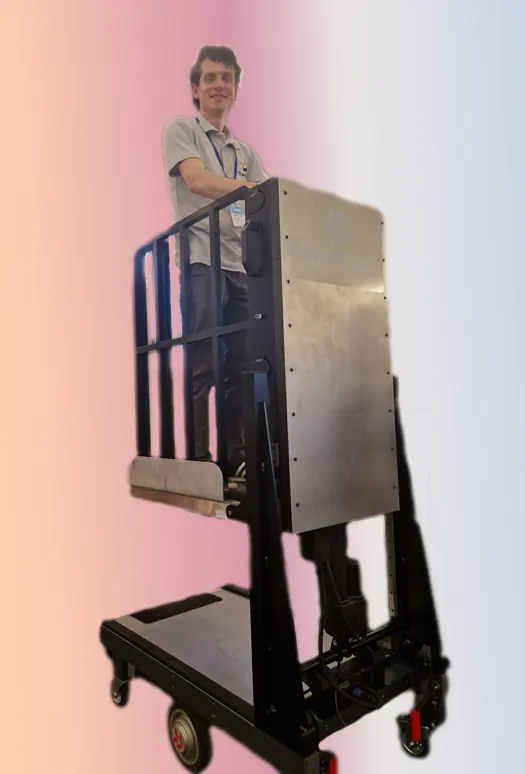
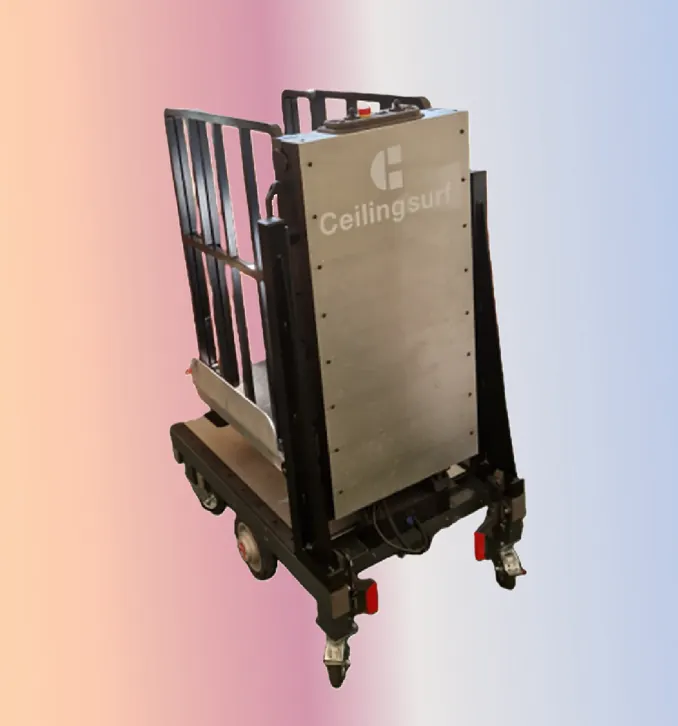
On the Ceilingsurf prototype upgrade, structural analysis was used as part of an iterative mechanical-design loop rather than as a final sign-off exercise. When the analysis called for changes, the geometry was updated and re-evaluated.
That analysis-led redesign contributed to a relevant lifting structure that was approximately 64% lighter while supporting the practical assembly and demonstration goals of the prototype.
How we work
A useful analysis depends on assumptions, loads, constraints and interpretation. We keep the model proportionate to the decision it needs to support.
Define the failure mode, design decision, load cases, interfaces and acceptance criteria.
Simplify geometry appropriately, define materials, contacts, constraints and mesh strategy.
Run the model, check behaviour, convergence and whether reactions and deformations make engineering sense.
Identify critical regions, load paths, sensitivities and the design implications of the results.
Update geometry, compare alternatives and, where appropriate, connect the model back to prototype or test evidence.
Not every project needs every stage. We scope around the next useful decision and the evidence needed to make it.
Why Twocan
Simulation is most useful when the analyst understands what can actually change in the design and can iterate the geometry with the result.
Analysis findings can feed directly into design changes rather than being thrown over a wall.
Loads, constraints and simplifications are treated as engineering choices that need to be understood.
We use enough model complexity to answer the question without making every problem unnecessarily expensive.
Manufacture, assembly and prototype constraints remain part of the design decision after the solver finishes.
“We asked Twocan to take it to the next version, and that is what they did. They worked through the mechanical engineering alongside us, iterated quickly when the analysis called for changes, and delivered in time for the demonstration we needed it for.”CS Platforms Ltd · Ceilingsurf prototype development
Capabilities
Move directly from analysis findings into revised CAD and engineering detail.
Explore serviceConnected capabilityBuild and test physical hardware to generate or challenge engineering evidence.
Explore serviceConnected capabilityUse analysis within a wider staged development programme.
Explore serviceConnected capabilityCarry validated geometry into DFM, drawings and supplier discussions.
Explore serviceEvaluate representative loading, critical regions, deformation and design sensitivity.
Use load-path understanding and iteration to target mass reduction without arbitrary material removal.
Common questions
If your project does not fit neatly into one of these questions, that is normal. Early engineering work is often about clarifying the problem before deciding what work package makes sense.
Typically CAD or enough geometry to create the model, material information, expected loads and constraints, and—most importantly—the engineering question the analysis needs to answer.
Yes. Analysis can be scoped as a focused task, although we will flag where geometry, assumptions or available data limit the confidence or usefulness of the result.
FEA can support a design and the evidence behind it, but formal certification depends on the product, applicable standards, test requirements and the relevant conformity route. We do not present a simulation result as certification by itself.
Yes. FEA can help identify load paths, critical regions and design sensitivity so lightweighting is driven by structural behaviour rather than simply removing material.
Yes. Where practical, physical test or prototype behaviour can provide valuable context for assumptions, loads and whether the model is representing the real system usefully.
Your next sensible step
Send a sketch, photo, CAD model, prototype or a short explanation of the problem. We can talk through where the project is now, what the next useful milestone could be and whether Twocan is the right fit.