Proof of principle
Prove that the core mechanism, physics or technical approach can work before investing in a complete product.
Twocan designs, builds and develops functional prototypes for products and technical systems. We can start from a sketch, CAD model, calculation, proof of principle or existing prototype — then engineer the next physical version around what you actually need to learn or demonstrate.
Start with the problem
The right prototype depends on the decision it needs to support. Higher fidelity is not automatically better — the aim is to spend enough to create useful evidence, then iterate.
Prove that the core mechanism, physics or technical approach can work before investing in a complete product.
Integrate the important systems so performance, usability, fit or behaviour can be tested in something representative.
Create a robust physical system that communicates the idea clearly in meetings, demonstrations or events.
Improve an existing build that is too heavy, awkward, fragile, difficult to assemble or not yet representative enough.
Relevant work · GiroStor
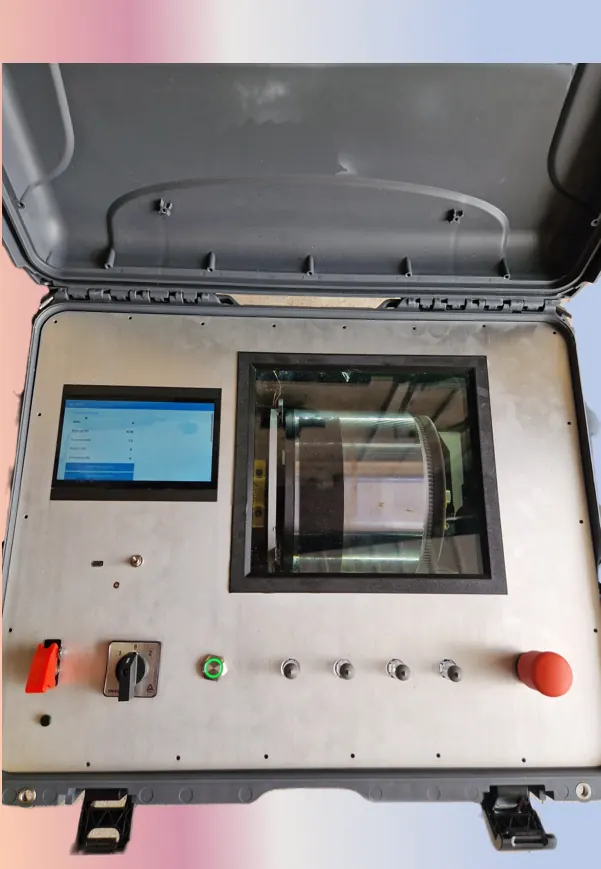
GiroStor had an early flywheel energy concept supported by calculations and presentation material. Twocan developed the technical model and built a working benchtop demonstrator that combined rotating hardware, electronics, controls and a touchscreen showing live output.
The physical build gave the project a much more tangible way to explain the concept in investor conversations while exposing the real engineering considerations involved in making it work safely.
How we work
We define the job of the prototype first. That keeps the build focused, avoids premature detail and makes each iteration useful.
What must this prototype demonstrate, measure, communicate or de-risk?
Select the minimum representative level of geometry, materials, controls and finish needed for that job.
Develop CAD, interfaces, calculations, safety considerations and the build approach.
Source parts, manufacture components, assemble and integrate mechanical and electronic systems.
Use the prototype, capture failures and learning, then update the design for the next development stage.
Not every project needs every stage. We scope around the next useful decision and the evidence needed to make it.
Why Twocan
Our prototype work stays connected to engineering intent. We are interested in whether the build answers the right question and moves the project forward.
We are comfortable carrying work from CAD into sourcing, assembly, troubleshooting and test.
Prototype fidelity is chosen around the evidence you need rather than an arbitrary idea of “finished”.
We do not need to start from a blank sheet. Existing prototypes can often be selectively upgraded.
Where appropriate, prototype decisions are made with later manufacture, cost and integration in mind.
“Their combination of technical expertise, creativity, and practical engineering ensured the project was delivered to a very high standard.”Sunjit Saroya · Co-founder, GiroStor
Capabilities
Plan the wider route from early concept to a tested, manufacture-ready product.
Explore serviceConnected capabilityEngineer the mechanisms, structures, packaging and interfaces behind the build.
Explore serviceConnected capabilityUse analysis to guide design changes before and during prototype iteration.
Explore serviceConnected capabilityMove successful prototypes towards repeatable manufacture and supplier quotations.
Explore serviceCoordinate prototype parts, processes, assembly and practical integration.
Develop focused tests and use results to drive the next design loop.
Common questions
If your project does not fit neatly into one of these questions, that is normal. Early engineering work is often about clarifying the problem before deciding what work package makes sense.
Yes, but we normally begin by turning the idea into clearer requirements and deciding what the first prototype actually needs to prove.
No. Twocan focuses on functional engineering prototypes and demonstrators. Appearance can matter, particularly for investor or exhibition use, but the engineering purpose comes first.
Yes. Existing prototypes are often the fastest route to useful progress because they show what already works and where the real problems are.
Yes. We can integrate mechanical hardware with electronics, controls and user-interface elements where the project requires it.
We can support the next design iteration, DFM, technical drawings, supplier engagement and the engineering needed to move towards production.
Your next sensible step
Send a sketch, photo, CAD model, prototype or a short explanation of the problem. We can talk through where the project is now, what the next useful milestone could be and whether Twocan is the right fit.